
📖 Introduction: AI and Human Creativity: The Future of Storytelling
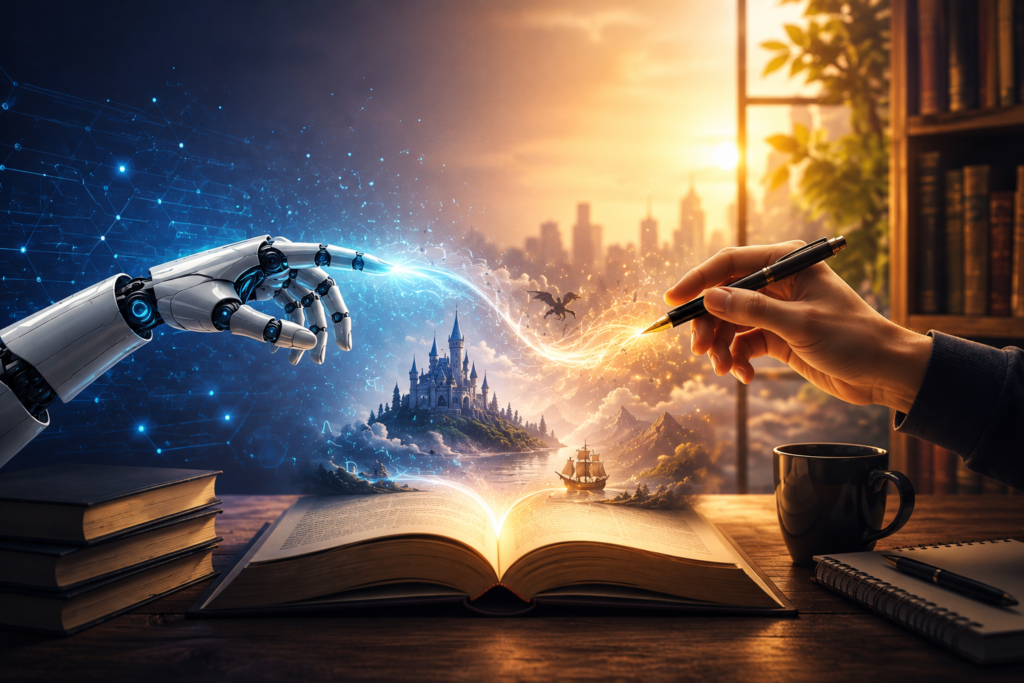
AI and Human Creativity are transforming storytelling in ways never seen before. Furthermore , as we move through 2026, writers and readers are experiencing a new era where technology and imagination work together. Imagine opening a book where every character feels real, every plot twist surprises you, and every story seems tailored to your interests. Welcome to 2026, where technology and creativity are coming together to redefine storytelling.
Moreover, Artificial Intelligence (AI) has rapidly become one of the hottest topics in the creative world. From helping authors brainstorm ideas to assisting publishers in reaching readers, AI is transforming how stories are written, shared, and experienced. However, despite all this innovation, one thing remains unchanged: the human desire for meaningful stories.
in fact, The question isn’t whether AI will change storytelling—it already has. Therefore, The real question is how writers and readers can embrace this exciting future while preserving the heart and soul of creativity.
🚀 Why AI and Human Creativity Work Together
Over the last few years, AI has evolved from a futuristic concept; consequentely, it has become a practical tool used by millions of people. Writers now use AI to generate ideas, organize chapters, create character profiles, and improve their writing process.
For example, What once took days of brainstorming can now happen in minutes. A writer struggling with a plot twist can receive suggestions instantly. An aspiring author unsure where to begin can generate an outline that provides direction.
However, This doesn’t mean AI is writing bestselling novels on its own. Instead, it acts like a creative assistant that helps writers focus on what matters most: telling compelling stories.
💡 Fun Fact: Many professional writers now use AI powered tools during the planning stage of their books while still relying on their own creativity to bring stories to life.
❤️ The Power of Human Imagination: AI and Human Creativity
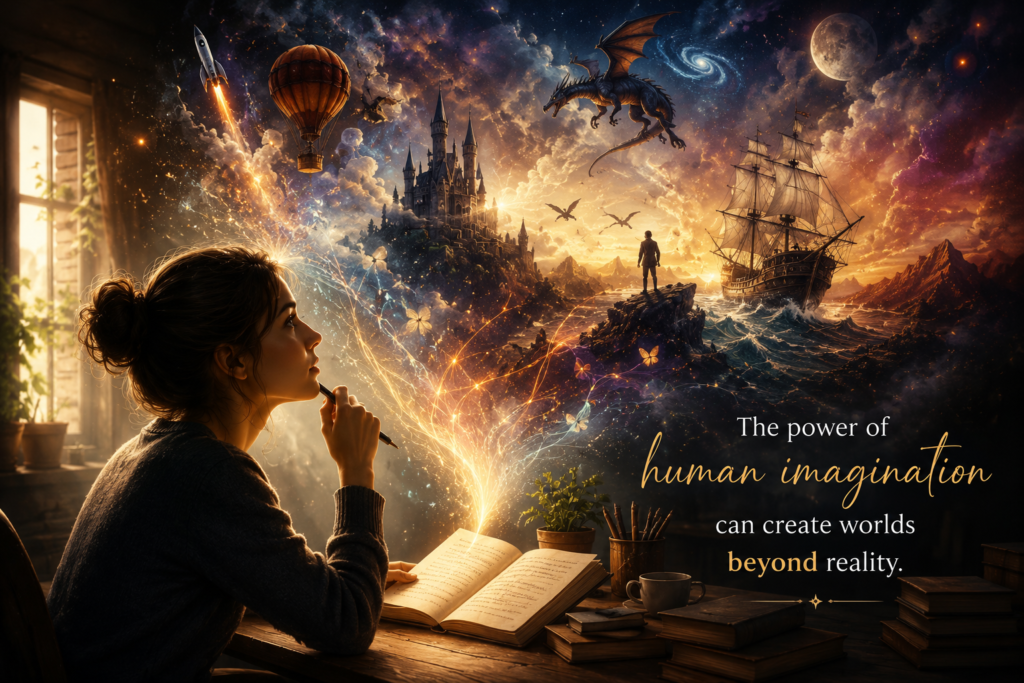
However, While AI can process information at incredible speeds, it cannot truly experience life.
It has never felt the excitement of achieving a dream, the heartbreak of losing someone important, or the comfort of a lifelong friendship. These emotions form the foundation of memorable storytelling.
Additionally, Readers don’t fall in love with stories because they’re perfectly structured. They connect with stories because they evoke emotions.
For instance, think about your favorite book. Chances are you remember how it made you feel rather than how perfectly it was organized.
Ultimately, that emotional connection is something only human creativity can provide.
What Humans Bring to Storytelling:
❤️ Authentic emotions that connect with readers
🌍 Drawing from personal experiences
🎭 Unique cultural perspectives
💡 The ability to generate original ideas
📚 Sharing meaningful life lessons
Nevertheless, technology can assist the process, but imagination remains uniquely human.
📱 How AI Is Changing the Reading Experience
The influence of AI extends beyond writers. Readers are also benefiting from smarter and more personalized experiences.
Have you ever wondered how streaming platforms seem to know exactly what you want to watch next? Reading platforms are beginning to do the same.
Furthermore, AI analyzes reading preferences, favorite genres, and engagement patterns to recommend books that readers are more likely to enjoy.
This creates a win-win situation:
📚 Readers discover books they genuinely love.
✍️ Authors gain visibility among the right audiences.
🌎 Communities grow around shared interests.
As digital reading continues to expand, personalized recommendations are becoming one of the most valuable tools in modern publishing industry.
🌍 A Golden Opportunity for Independent Authors
For decades, traditional publishing served as the primary gateway to reaching readers. While it remains important, the rise of digital platforms has created exciting alternatives.
Independent authors now have opportunities that previous generations could only dream about.
Instead of waiting months—or even years—for a publishing decision, writers can share their work directly with readers around the world.
Benefits for Independent Writers
🚀 Greater Creative Freedom
Authors can write the stories they truly want to tell without worrying about fitting industry trends.
🌎 Global Reach
A writer can publish a story today and attract readers from multiple countries tomorrow.
📈 Faster Growth
Digital platforms allow authors to build communities, receive feedback, and improve continuously.
💰 More Publishing Options
Writers can choose traditional publishing, self-publishing, serialized storytelling, or hybrid approaches.
The literary landscape has never been more accessible.
📚 The Rise of Digital Storytelling
Modern readers consume stories differently than previous generations.
Books are no longer limited to physical shelves. Stories now exist everywhere:
📖 eBooks
🎧 Audiobooks
📱 Mobile reading apps
🌐 Online publishing platforms
🎮 Interactive storytelling experiences
This shift has made reading more accessible than ever before.
Busy professionals listen to audiobooks during commutes. Students read chapters on smartphones between classes. Readers discover new authors through online communities and recommendations.
However, The future of storytelling isn’t replacing books—it’s expanding how stories reach people.
⚡ AI and Creativity: A Perfect Partnership
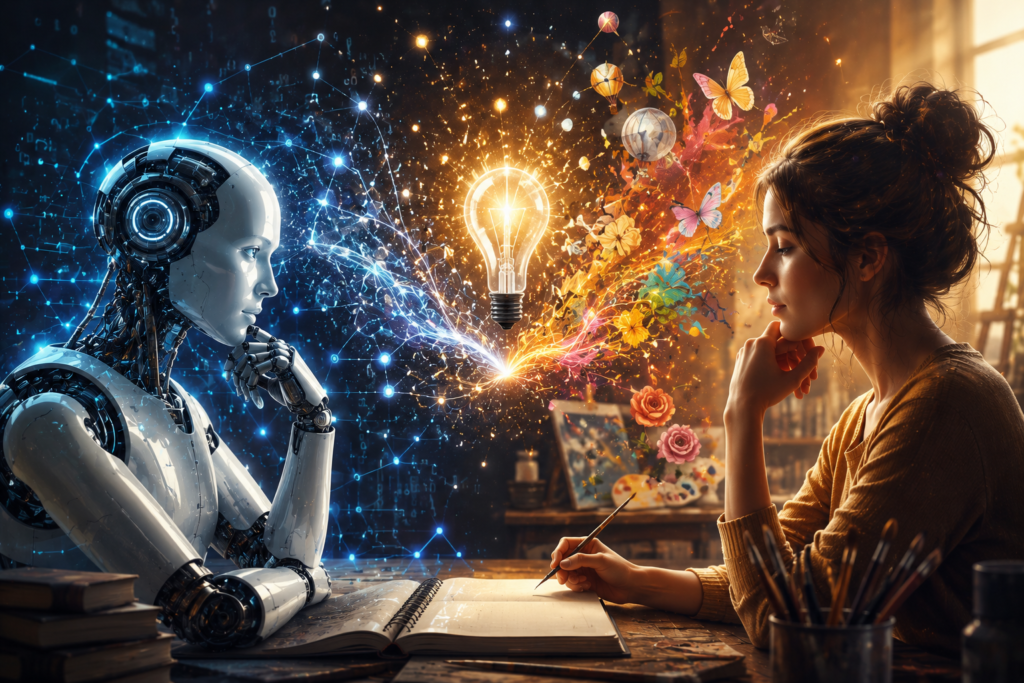
Many people view AI and creativity as competitors.
In reality, they work best together.
Think of AI as a powerful tool, similar to a camera for photographers or editing software for filmmakers. The tool helps execute ideas, but the vision still comes from the creator.
Successful writers are learning how to use technology without sacrificing originality.
They use AI to:
Successful writers are learning how to use technology without sacrificing originality. For example, AI can help generate fresh ideas during brainstorming sessions. In addition, it assists with organizing content and planning story structures. Furthermore, many authors use it to improve productivity and streamline their workflow. Moreover, AI supports draft refinement by suggesting edits and improvements. Finally, it encourages writers to explore new creative possibilities while maintaining their unique voice.
Then they add the element no machine can replicate:
❤️ Human emotion.
⚠️ Challenges We Must Address
Like any major technological advancement, AI introduces important challenges.
Authenticity
Readers deserve transparency regarding how content is created.
Copyright Concerns
Questions surrounding ownership and intellectual property continue to evolve.
Quality Control
The ability to generate content quickly means maintaining high editorial standards is more important than ever.
Preserving Original Voices
As technology becomes more common, protecting individuality and creativity remains essential.
The future of storytelling depends not only on innovation but also on responsible use.
🔮 What Storytelling Will Look Like in the Future
The next decade promises exciting developments.
Experts predict:
✨ Personalized reading experiences
🚀 Smarter recommendation systems
📖 Interactive digital novels
🤝 Stronger author-reader relationships
🌍 Greater opportunities for emerging writers
⚡ More advanced creative tools
Readers may eventually experience stories that adapt based on their preferences and choices, creating entirely new forms of engagement.
Yet despite all these innovations, one truth will remain constant:
People will always seek stories that inspire, entertain, and connect them to others.
🌟 Why Stories Matter More Than Ever
In a world filled with endless information, stories help us make sense of our experiences.
First, They teach empathy.
Moreover, stories inspire action.
In addition , they preserve culture.
Most importantly, they bring people together.
Technology changes. Platforms evolve. Trends come and go.
But storytelling remains one of humanity’s most powerful forms of communication.
Whether a story is written with pen and paper, typed on a laptop, or created with the assistance of AI, its purpose remains the same: to connect people through shared experiences.
🎯 Final Thoughts: AI and Human Creativity
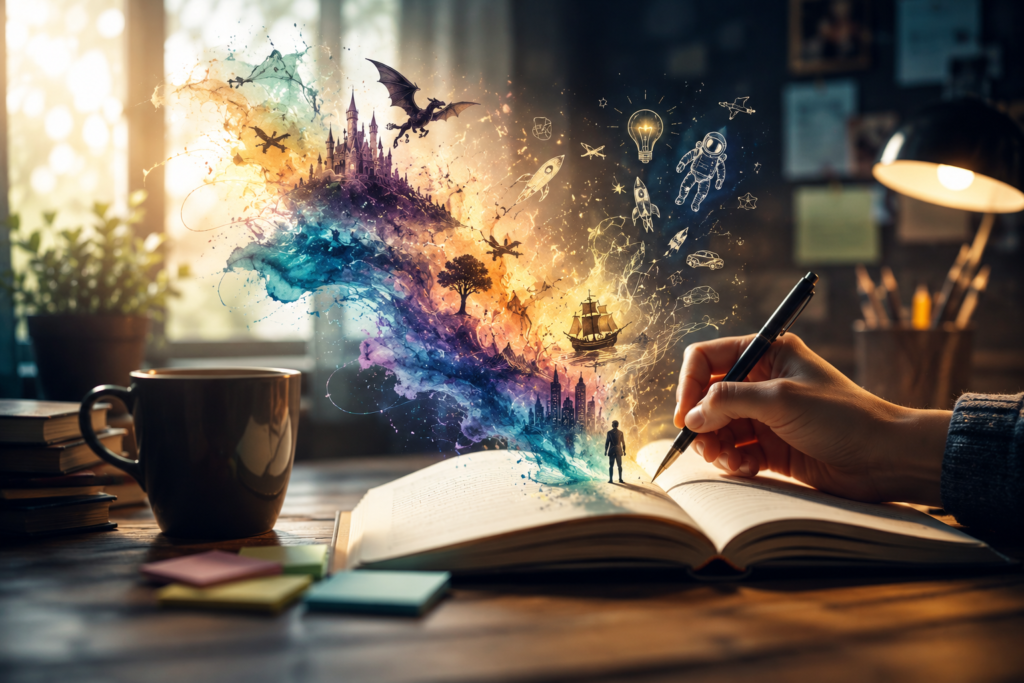
The future of storytelling is not a battle between humans and machines.
It is a collaboration.
AI offers incredible opportunities to improve efficiency, spark creativity, and expand access to publishing. Human writers provide the imagination, emotion, and authenticity that transform words into unforgettable experiences.
For Example, As we move deeper into 2026 and beyond, the most successful storytellers will be those who embrace innovation while staying true to their unique voices.
Because at the end of the day, technology may help create stories—but only humans can give them a soul.
✨ The next great story isn’t waiting in the future.
It’s waiting for someone brave enough to write it.